
Tulips are not difficult plants. They are, however, particular about a few things, and when those things are wrong the failure is public: a gap in the border, a stem that keels over, a flower the size of a thumbnail. Most disappointing springs can be traced back to a handful of habits — and all of them are easy to change.
Here are the mistakes worth avoiding, roughly in the order you are likely to make them.
Planting Too Late, and Too Shallow
The single most common reason for a poor tulip display is delay. Bulbs need a stretch of cool soil to build roots before winter properly arrives. In most of the UK, November is the sweet spot. Early December still works. Planting in January usually means shorter stems, smaller flowers, a later show, and a few bulbs that produce leaves but no bloom at all.
Depth matters just as much as timing. Aim for roughly three times the height of the bulb — about 15cm for large Darwin hybrids, 10cm for smaller species tulips — with the pointed tip facing upwards. Shallow planting leaves bulbs exposed to frost heave and drying winds, encourages stems to topple, and makes life easy for squirrels.
- Loosen the soil to a spade's depth and fork in well-rotted compost.
- On heavy clay, sit each bulb on a small handful of grit or sharp sand.
- Set bulbs at three times their own height, spacing large tulips 10–15cm apart.
- Water once to settle the soil around them, then leave the rest to the weather.
- Label the row, or at least note where it is. You will not remember in March.
Overwatering and Poor Drainage
Tulips evolved on dry, stony hillsides. Wet feet are fatal, and a waterlogged bulb in November rots quietly and produces nothing in spring. This is the mistake most often made with pots, where compost can stay saturated for weeks under winter rain.
Fix the drainage before you plant, not after. Use a free-draining compost mixed with grit, check that drainage holes are clear, raise pots onto feet, and leave saucers off through winter. In the ground, add grit to clay and avoid any hollow where water collects. If a bulb feels soft, looks mouldy or smells sour, throw it away — planting it risks passing rot on to its neighbours.
Watering in spring
Once growth starts, water during genuinely dry spells, especially in containers, but let the top few centimetres dry out between waterings. Tulips cope with drought far better than with a permanently damp root run. If in doubt, don't water. Overwatering is much harder to correct than a missed canful.
Cutting Back Leaves Too Soon
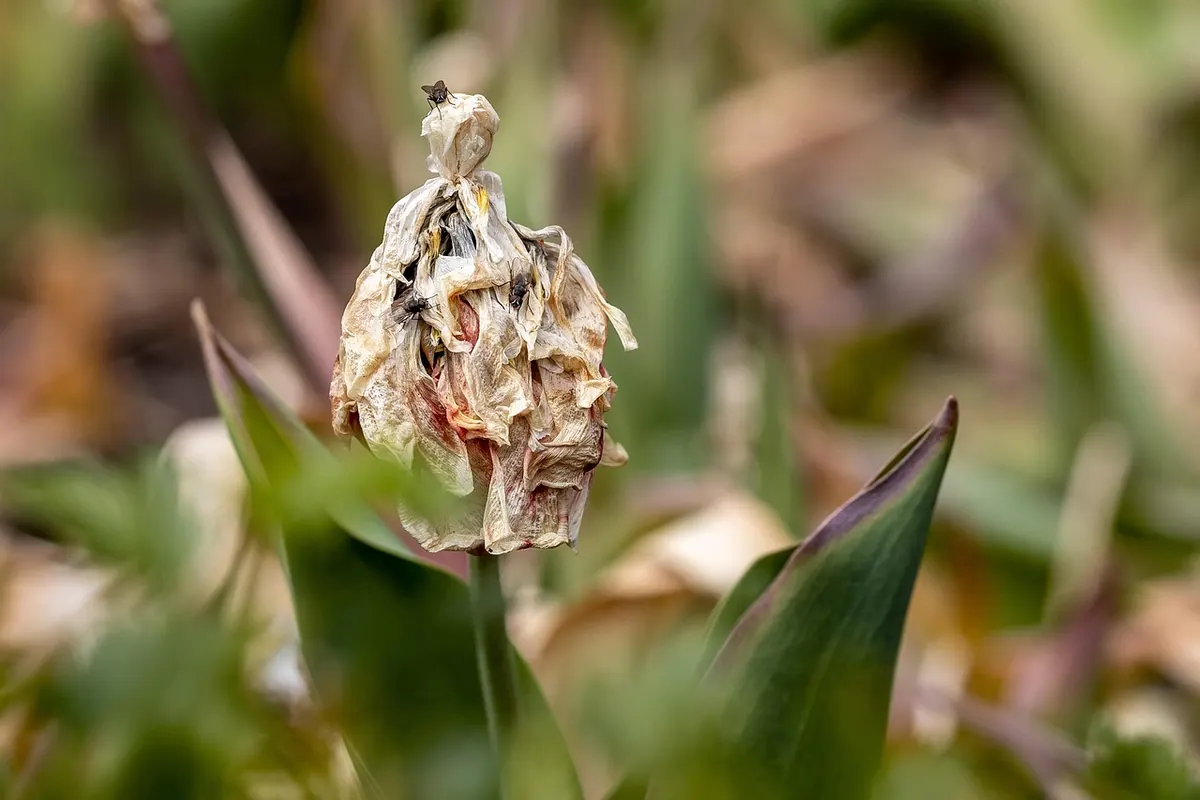
This is the mistake that costs you next year's flowers. After the petals drop, the leaves carry on working: they turn light into food and send it down to the bulb to fuel the following spring. Cut them off while they are still green and the bulb goes into summer with an empty larder.
Do this instead. Deadhead as soon as the petals fall, pinching or snipping off the seed head but leaving the stem and every leaf intact. Then wait. Foliage usually needs about six weeks after flowering before it yellows, flops over and pulls away easily. That looks scruffy in a tidy border, so plan for it: hide fading tulips behind hardy geraniums, catmint or lady's mantle, or grow them in pots you can move out of sight behind a hedge.
Skipping the Deadheading
Left to set seed, a tulip puts its energy into fat seed pods rather than the bulb below. Snap or snip the flower head off just below the petals and leave the stem standing — it keeps feeding the bulb until it dries out. Doing this on an evening walk round the garden takes a few minutes and noticeably improves the size of next year's blooms.
Ignoring Feed, Airflow and Disease
Tulips are not hungry plants, but they benefit from a low-nitrogen, potassium-rich bulb feed as the shoots emerge and again after flowering. Rich manure or high-nitrogen fertiliser does more harm than good: it pushes soft, floppy growth that disease finds easy work.
Good airflow matters too. Grey, fuzzy mould and distorted, mottled leaves are the signs of tulip fire, a fungal problem with no cure once a plant is infected. Lift and bin affected plants — not the compost heap — and avoid planting tulips in that spot for a few years.
- Water the soil, not the foliage, in spring.
- Remove any spotted or twisted plant the moment you see it.
- Don't grow tulips in the same bed year after year.
- Net pots and new plantings if squirrels are digging them up.
- Keep spent foliage clear of the soil surface to reduce shelter for slugs.
Expecting the Same Display Every Year
Some tulips return reliably — many species tulips, and a good number of Darwin hybrids — but the large, frilly, multi-layered show varieties often fade after a season or two in British gardens. That is not a failure on your part. Decide in advance whether you are growing tulips as short-lived bedding or as a lasting planting, and treat them accordingly. If you want the boldest possible show, buy fresh bulbs each autumn. If you want the border to fill itself, choose reliable varieties, leave the foliage to die back naturally, and lift and store the bulbs in a cool, dry, airy place over summer.
A Simple Routine That Prevents Most Problems
Plant in November at three times the bulb's depth, on a cushion of grit if your soil is heavy. Water once, then leave winter alone. In spring, feed twice, water only in dry spells, and deadhead promptly. Leave the leaves for six weeks after flowering, even when they look tired. Bin any diseased plant, and don't replant tulips in the same ground straight away.
Follow those few steps and the tulips will do the rest. The reward is a spring border that looks deliberate rather than hopeful — and bulbs that come back stronger than the year before.
Photo: Photorama / Pixabay