

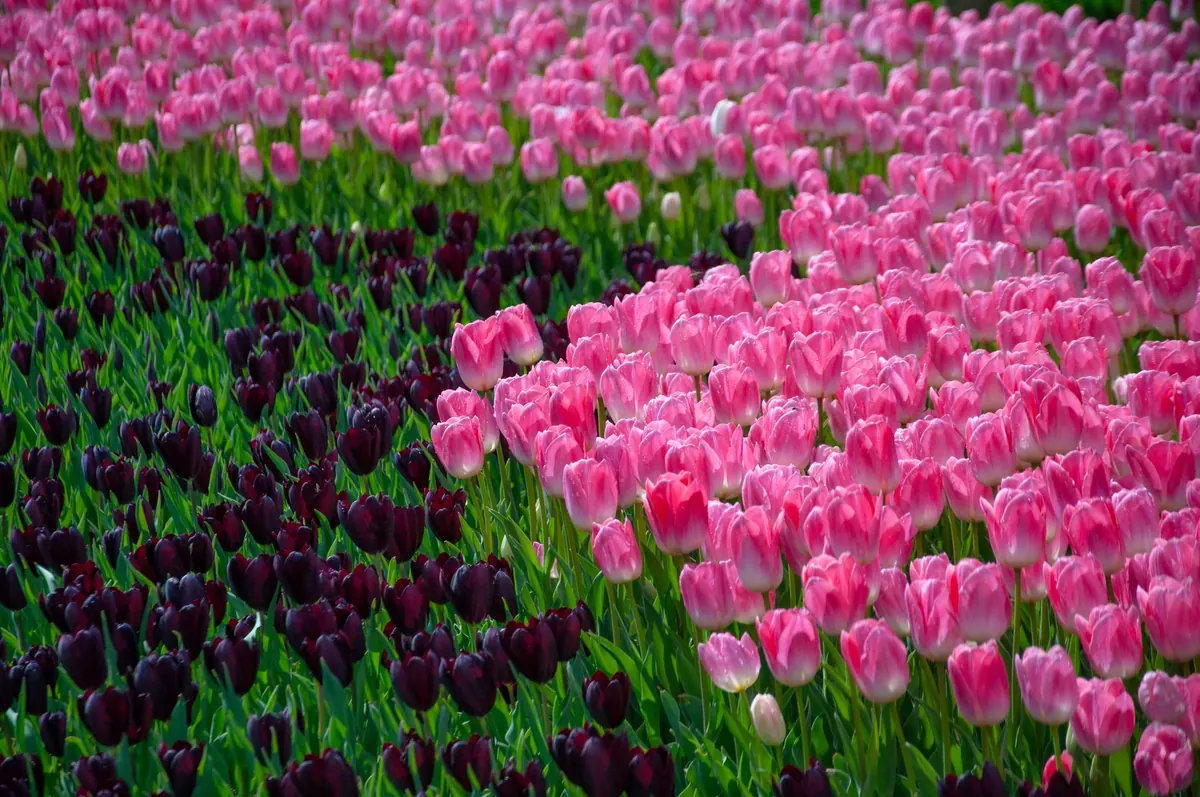
A tulip does not read the calendar. It reads the cold, the soil and the light — which is why a garden near Penzance can be in full colour while one in Aberdeenshire is still waiting for the ground to warm, both planted on the same October weekend. Knowing roughly when your tulips will flower makes planning far easier. It also lets you stagger varieties so the display runs for six weeks instead of ten days.
How the Tulip Season Actually Works
A tulip bulb goes into the ground dormant. Before it will grow, it needs a stretch of cold — broadly, several weeks at temperatures below about 10°C. Most of the UK delivers that without any help, which is one reason tulips are so dependable here. Once that cold requirement is met, growth is driven by soil temperature and lengthening days.
Flowering is therefore a matter of accumulated warmth rather than a fixed date. A sunny March can pull blooms forward by a week or more; a cold snap in April can hold them back just as long. The same variety planted in the same compost will open a fortnight earlier in Cornwall than in Northumberland. Treat every date below as a guide, not a promise.
The Season at a Glance
Variety group matters more than anything else. Within each group, these are typical timings in an average UK year, with regional variation on top:
- Species and botanical tulips (T. kaufmanniana, T. greigii, T. fosteriana): late March to mid-April
- Single Early and Double Early: late March to mid-April
- Triumph and Darwin Hybrid: mid to late April, with Darwin Hybrids often peaking in the final days of the month
- Lily-flowered, Viridiflora and Single Late: late April to mid-May
- Double Late, Parrot and Fringed: May, and into early June in the north
Plant one or two varieties from each group and you will have tulips in flower from the end of March until early June almost anywhere in the country.
Early Blooms: Mild South-West and Coastal Gardens
In Cornwall, Devon, Dorset, Pembrokeshire and the sheltered pockets along the south coast, spring arrives first. Early varieties can be open by the last week of March, and the main flush is usually over before May. A warm wall, a south-facing slope and light soil all pull the date forward.
The trade-off is chilling. Very mild winters, especially right on the coast, sometimes fail to give bulbs the cold they need, and you may see short stems, blind bulbs or flowers that never open properly. Species tulips and Darwin Hybrids cope best. If your garden rarely sees a hard frost, buy pre-chilled bulbs or keep them in the fridge — away from fruit — for six to eight weeks before planting, and accept that some doubles are best treated as annuals.
Mid-Season Across the Midlands, South-East and Wales
For most of England and Wales — the Midlands, the Home Counties, East Anglia, the Welsh borders and the lowland fringes — the heart of the tulip season falls in the second half of April. Triumph and Darwin Hybrid tulips are usually at their best between the middle and the end of the month, with Single Lates following on behind them.
This is when parks, churchyards and village verges look their brightest, and when most of us take our tulip photographs. It is also the fortnight when weather matters most. Heavy rain and wind can strip the petals from tall Parrot and Double Late varieties in a day, so choose a sheltered spot or stake the tallest stems. By the time the late-May flower shows come round, most of these tulips have finished, which is why designers working then rely on late varieties held back in cool conditions.
Late Tulips in the North, Scotland and Exposed Uplands
North of a line roughly from the Humber to the Mersey, and at altitude anywhere in the country, add two to three weeks. Gardens in the Pennines, the Yorkshire Dales, Cumbria, Northumberland, the Scottish Lowlands and the Highlands often see their main display in the first half of May, and late varieties can still be looking good in early June.
Cold soil is the main reason, but exposure plays its part. A tulip in full flower in a windy northern garden can be flattened overnight, so favour shorter, sturdier stems: Darwin Hybrids, Single Lates and species tulips all stand up well. Planting deeper than usual, around 15–20cm, anchors the bulb and gives a slightly later but stronger flower. In a cold year everything shifts back another week; in a mild one, northern gardens can almost keep pace with southern timings.
What Pushes Blooming Earlier or Later
Beyond variety and region, a handful of local factors decide the exact week your tulips open.
- Aspect: a south-facing border against a wall can run a full fortnight ahead of an open, north-facing site.
- Soil: sandy, free-draining ground warms quickly; heavy clay stays cold and wet for longer. Working in grit and organic matter helps both drainage and timing.
- Planting depth and date: bulbs set deeper and planted later in autumn flower a little later, but tend to be more robust.
- Mulch: a thick mulch keeps soil cool and can delay flowering — useful if you want to hold a display back for an event.
- Wind and frost: cold air, not just cold soil, slows growth. A hedge or shelter belt makes a measurable difference.
- Stored warmth: town gardens, courtyards and borders beside paving are consistently ahead of the surrounding countryside.
Planning a Longer Season in Your Own Garden
Plant in groups by flowering time rather than mixing everything together. Put early varieties where you walk past them daily — by the front door, along a path — and save the later ones for the coldest, most exposed corner, where they will come into their own once the rest have gone over.
Keep a simple record. Note the date the first bud opens on two or three varieties each spring, and within a couple of years you will know your garden's own rhythm better than any general guide can tell you. It is a small habit that pays off when you are ordering bulbs in September.
After flowering, deadhead to stop the plant putting energy into seed, but leave the foliage until it yellows — usually about six weeks. Feed with a high-potash liquid fertiliser while the leaves are still green. Tulips dislike sitting wet through summer, so in heavy soil it is often easiest to lift the bulbs once the leaves have died down, dry them somewhere airy and store them cool and dark until autumn. If that sounds like too much fuss, treat them as annuals and plant fresh bulbs each year. There is no shame in it, and the display is usually better for it.
Photo: Şengül Keleş / Pexels