
Tulips are the simplest way to make a spring garden look as though someone thought about it. You plant them in autumn, ignore them for months, and in April the border suddenly has structure, colour and a bit of drama. The difficult part is choosing. A catalogue will offer hundreds of names, and the differences between many of them come down to a fortnight of flowering time and twenty centimetres of height — the very details that decide whether a planting looks considered or accidental.
Start with three decisions: when the tulip flowers, how tall it grows, and what colour it brings. Everything else — petal shape, whether it doubles, whether it naturalises — can follow.
Start with flowering time, not colour
Tulips are usually sold as early, mid-season or late. In UK conditions, early varieties open from late March into April, mid-season types fill the middle of April, and late varieties run from late April into May, with some still going in early June after a cool spring.
This matters because gaps and clashes are what make a spring border look patchy. Two tulips you loved on separate pages can flower three weeks apart and never meet, leaving a hole exactly where you expected a mass of colour. Equally, a late variety planted behind an early one will emerge into a gap that has already gone over.
If you want a long display from a single bed, plant in layers: a few early doubles for pots near the door, Triumphs or Darwin Hybrids for the main event in mid-April, and a late group to carry the border into May. Early tulips can be caught by a late frost, though they usually shrug it off; late ones can be cut short by a sudden hot spell, which in most UK springs is a modest risk.
Decide the height before you fall for a photograph
Height is where beginners get caught out. A tulip photographed alone in a catalogue gives no clue whether it will stand above a wallflower or disappear behind it.
- Dwarf (15–30cm): species tulips, plus Kaufmanniana and Greigii types. Ideal at the front of a border, in rock gardens, in shallow pots and in grass.
- Medium (35–50cm): most Triumphs, double early varieties and many fringed tulips. The workhorse range for borders and containers.
- Tall (50–70cm): Darwin Hybrids, Single Lates, many parrots and lily-flowered types. Best in the middle or back of a border, and best sheltered from wind.
Tall tulips in an exposed site will lean, and often snap. If your garden catches the wind, either plant them among sturdier perennials or choose medium varieties. In pots, shorter stems are less likely to topple, especially once the compost has been watered and the flowers have filled out.
The groups worth knowing
Triumph and Darwin Hybrids
Triumph tulips are the reliable middle of the season — strong stems, classic cup shapes, colours from soft apricot to near-black. Darwin Hybrids are taller and later, with enormous flowers and a reputation for coming back for a second year better than most. 'Apeldoorn' and 'Pink Impression' sit in this camp. If you plant only one group, plant these.
Single Late and lily-flowered
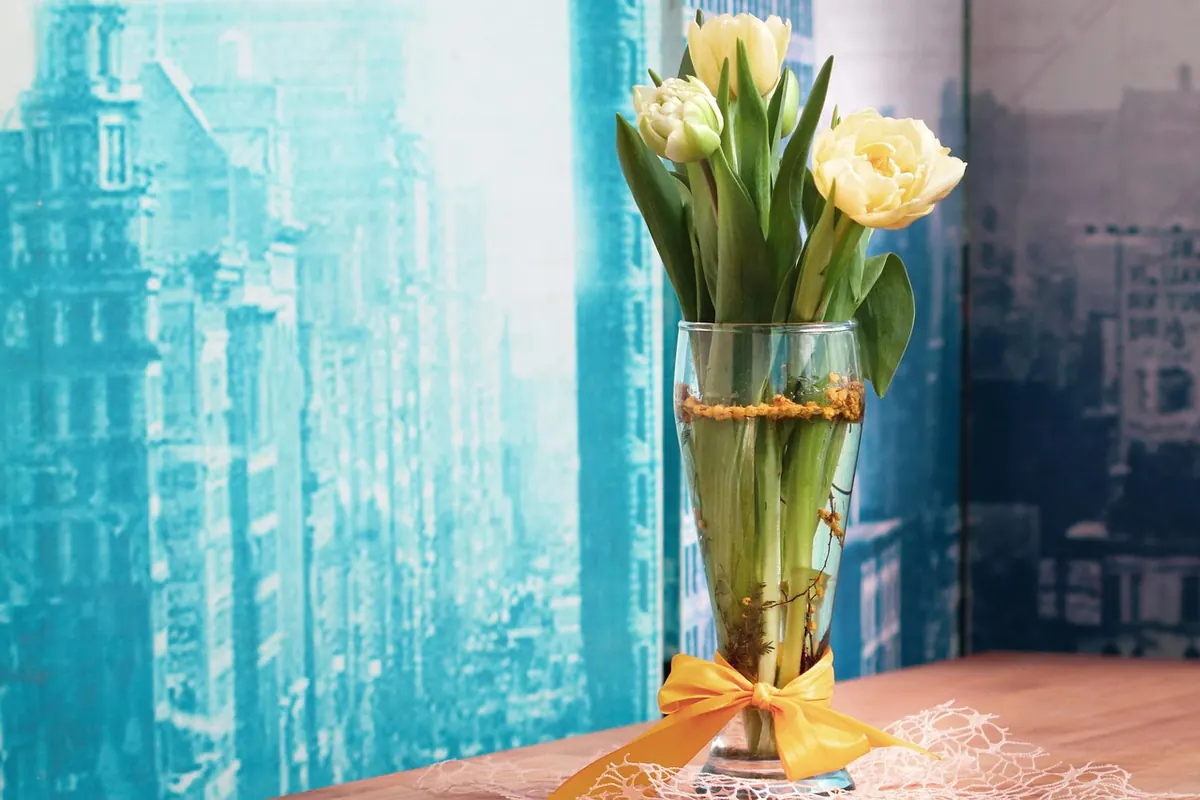
These finish the season. Single Lates are tall and elegant, and include the deep purple 'Queen of Night' as well as the green-and-white 'Spring Green'. Lily-flowered tulips have narrow, pointed petals that open wide in sun — 'Ballerina' is the well-known orange one, and it has a fine scent.
Doubles and parrots
Double tulips look like peonies and last longer in a vase; they do, however, hold water in the petals and can flop after heavy rain. Parrots have fringed, twisted petals and are best used as a focal point rather than a mass planting. Both are worth a pot rather than a whole border.
Species and dwarf tulips
Small, early and unfussy. Tulipa tarda has starry yellow-and-white flowers that open wide in sunshine; Tulipa sprengeri flowers later than almost any other tulip and will seed about in grass. They prefer sharp drainage and being left alone, which makes them a good choice for gravel gardens and lawns you do not mow until June.
Colour: choose a scheme, not a collection
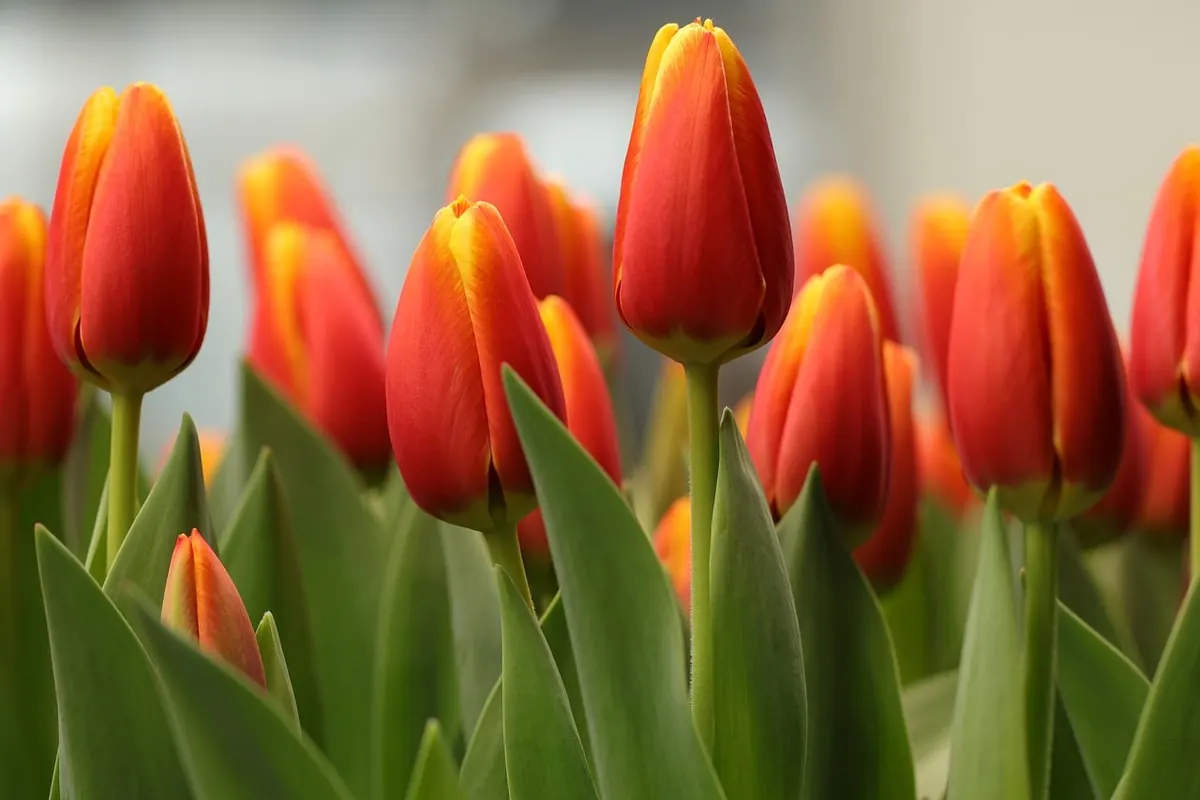
Tulips are bold enough that a mixed bag can look like a jumble sale. Pick one or two colours and repeat them. White and cream lift shady corners and look calm against stone or brick. Deep purple and burgundy sit well with lime-green foliage and bronze grasses. Red and orange are cheerful but greedy — give them space and pair them with dark foliage so they do not shout across the whole garden.
Also consider how the flowers fade. Some tulips age gracefully, holding their shape as the colour softens; others go muddy at the edges within days. In a border you see every stage, so it pays to choose varieties that finish well.
Matching tulips to beds, borders and pots
- Mark where the sun falls. Tulips need light to open fully; in shade they stay closed and the display is half as good.
- Choose one dominant colour and one accent, then pick two varieties that flower a fortnight apart so the colour lasts longer.
- For beds and borders, plant in drifts of at least ten bulbs of the same variety rather than a single file. Odd numbers and irregular shapes look more natural.
- For pots, plant large-flowered medium varieties closely — almost touching — in a loam-based compost with grit mixed through for drainage.
- For grass and gravel, use species tulips and dwarf types, and resist tidying the foliage until it has yellowed.
Buying and planting: the short version
Buy firm, heavy bulbs in late summer or early autumn, and plant from October into November, while the soil is still workable. As a rule of thumb:
Plant each bulb at roughly three times its own height — about 15cm deep for large tulips, 10cm for species — and space them 10–15cm apart.
Avoid planting tulips where tulips have grown in the past few years, since tulip fire lingers in soil. Good drainage matters more than rich feeding; soggy winter compost is the quickest way to lose a potful. Squirrels will dig up freshly planted bulbs, so a layer of mesh or a sheet of chicken wire pinned over the surface is worth the trouble. In pots, most gardeners treat tulips as annuals and start again each autumn, which is honest and reliable.
A simple first-year plan
Keep it small and finish it well. Choose one tall variety for the back of a border, one medium variety for the middle, and one dwarf or species tulip for the front or a pot by the door. Order them in August, plant them in October, water the pots through dry spells in spring, and deadhead as the petals drop so the plant puts energy into the bulb rather than seed.
Leave the foliage for six weeks after flowering before you clear it, even though it looks untidy. Then make a note — on paper or your phone — of what flowered when, what flopped, and what you would plant more of. Spring comes round quickly, and next autumn you will be choosing with a season of experience behind you.
Photo: Marjonhorn / Pixabay