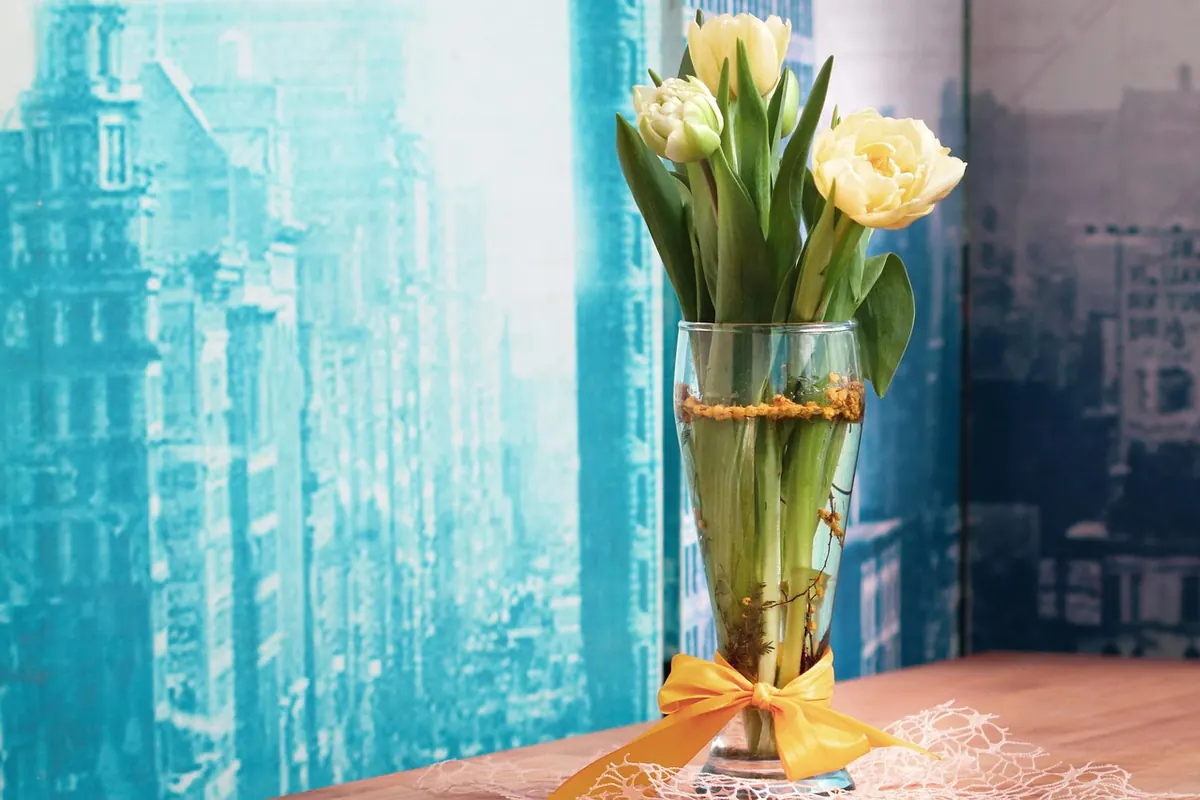

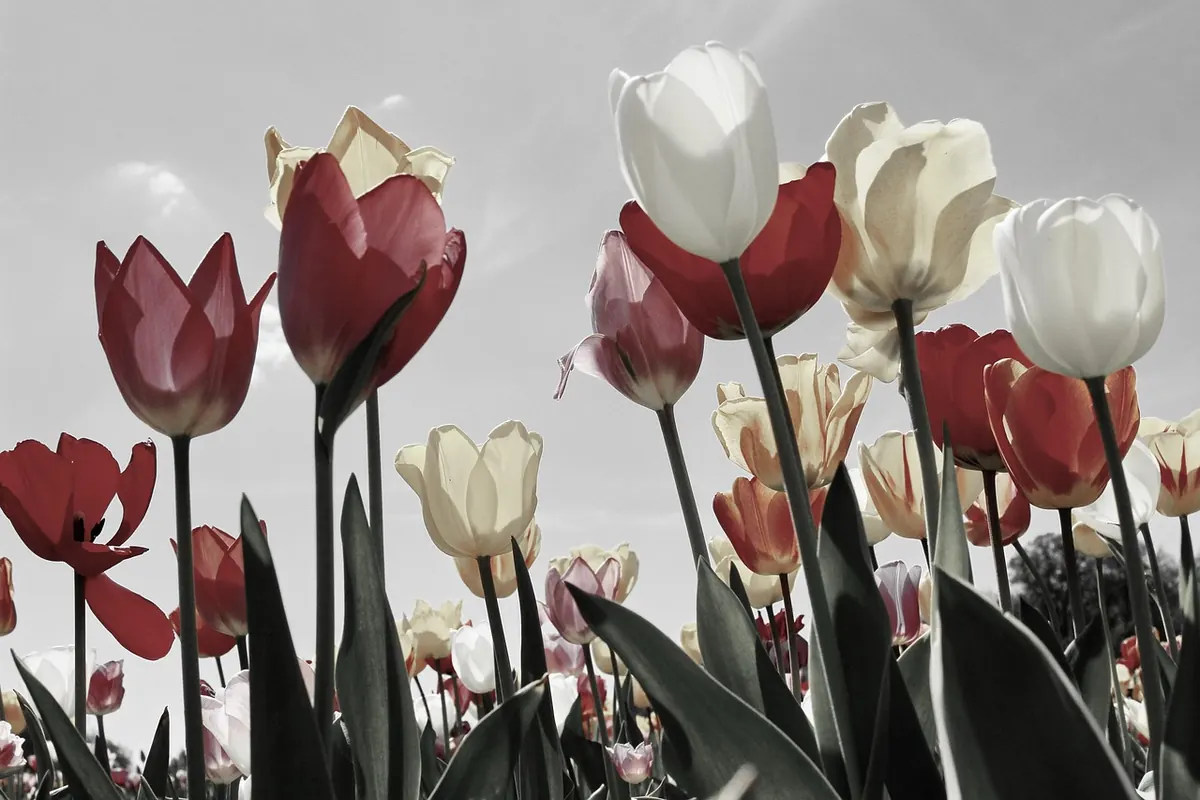
Tulips look good in a border. They look better in a pot. Lifted to eye level, backed by a warm wall and catching the low spring sun, a container of tulips gives you a display you simply cannot get from plants half-hidden at ground level. Pots also give you control: you choose the compost, you move the plants out of the wind, and you can clear the whole thing away in June without disturbing a single border perennial. The catch is that tulips in containers want a few things that are the opposite of what most people assume — drier feet, less food, and a genuinely cold winter.
Choose a pot that will take the weather
Depth matters more than most gardeners expect, because tulip roots run deep. A pot 30cm across and 25cm deep will hold six to eight large bulbs comfortably, and that is a sensible minimum for a proper display. Wide, shallow pans dry out too quickly and leave the bulbs crowded; tall, narrow pots topple in a gust on a balcony.
Terracotta breathes, looks right and dries out faster, which suits a sheltered patio where you water often. Glazed ceramic and plastic hold moisture longer, so they are a better bet for windy, exposed balconies where you may not get out with the can for days. Dark pots and metal containers heat up fast in a sunny position, which is worth remembering if you plan to leave them against a south-facing wall.
Wet compost is heavy. On a balcony, group smaller pots rather than filling one enormous container, and check what your balcony or roof terrace is designed to carry before you commit to a row of large ceramic planters. If you rent, a quick word with the landlord or managing agent costs nothing.
Drainage first, then compost
Tulip bulbs rot in soggy compost, so drainage comes before anything decorative. Make sure every pot has generous holes in the base — one per 10cm of width is a reasonable guide — and stand pots on feet, bricks or purpose-made pot risers so water can escape instead of pooling underneath.
Skip the traditional layer of gravel in the bottom. It does not improve drainage; it simply raises the saturated zone closer to the bulbs. A single broken crock over each hole to stop compost washing out is plenty.
For the compost itself, mix your own:
- two parts peat-free multipurpose compost
- one part horticultural grit or coarse bark
- a small handful of slow-release fertiliser or blood, fish and bone per pot
Fresh compost each year is worth the money. Reusing last season's compost risks carrying over bulb diseases and vine weevil grubs, and it will have lost much of its structure.
Planting depth, spacing and timing
Tulip bulbs are roughly 5cm tall, so plant them about three times their own height deep — around 15cm from the base of the bulb to the surface. That means roughly 10–12cm of compost beneath the bulb, so a 25cm pot is not generous, it is about right.
- Half-fill the pot with your compost mix and firm it gently.
- Sit the bulbs on the surface, pointed end up, about 5–8cm apart. They can almost touch; close planting looks better and supports the stems.
- Cover with compost to 5cm below the rim, leaving a watering gap.
- Water once, thoroughly, and let it drain.
- Add a 2cm mulch of grit to deter squirrels and keep the surface dry.
Plant from late October through to December. November is the sweet spot in most of the UK. Late planting is deliberate: it keeps bulbs out of warm, wet autumn soil, which is when tulip fire — a fungal problem that causes twisted, scorched leaves and spotted flowers — does its worst. If you buy bulbs early, keep them somewhere cool and airy until you plant.
Want flowers sooner?
You can layer bulbs in one pot for a longer show: the deepest layer of tall late varieties, a 3cm gap of compost, then a layer of shorter early ones such as 'Purissima' or 'Peppermint Stick' on top. The earlies flower first, the lates follow.
Overwintering on a patio or balcony
Here is the counter-intuitive part: tulips need cold. A mild, protected winter produces floppy stems and small flowers. So do not tuck pots into a warm porch or bring them indoors — a cool greenhouse or cold frame is ideal, but outdoors is fine.
The real risk is not frost, it is water. Freezing solid is survivable; sitting in a saucer of icy water for weeks is not. Keep pots on feet, keep the holes clear, and check after heavy rain that nothing is standing underneath.
On an exposed balcony, wind chill does more damage than the thermometer suggests. Practical steps that help:
- Move pots against a wall or into a corner, out of the prevailing wind.
- Group them together — massed pots shelter one another.
- Wrap the pot, not the foliage, in bubble wrap or hessian during a hard spell.
- Water sparingly; damp compost in December is the main killer of overwintering bulbs.
Expect shoots to appear from late January into February. From that point, keep the compost just moist and never bone dry.
Watering, feeding and pests through spring
Once growth is underway, water when the top 2cm of compost feels dry. Tulips in pots need more water in March and April than in winter, but they still hate being waterlogged, so little and often beats a weekly soaking. Start feeding with a high-potash tomato feed when the buds colour up, and stop when the flowers fade.
Tall varieties such as 'Apeldoorn' or 'Queen of Night' will flop in wind. Push a few twiggy hazel stems in among them early, before the stems need support. Slugs and snails graze young shoots on wet nights; scatter a barrier or go out with a torch. Squirrels excavate freshly planted pots in autumn, which is where that grit mulch earns its place.
After flowering: lift, store, or start again
Deadhead the flowers as they go over, but leave the leaves. They are feeding the bulb for next year, and cutting them early is the fastest way to a poor display the following spring. Feed once more, then wait. Six weeks after flowering, the foliage will have yellowed and can be pulled away.
You then have a choice. Lift the bulbs, dry them somewhere cool and airy, and store them in a paper bag in a shed or garage until autumn. Or tip the whole lot onto the compost heap and buy fresh bulbs in September — many container growers do exactly this, because tulips perform best in their first year and the space is needed for summer planting anyway. Neither approach is wrong. Fresh bulbs and fresh compost simply make the following spring much more predictable.
Photo: John-Silver / Pixabay