
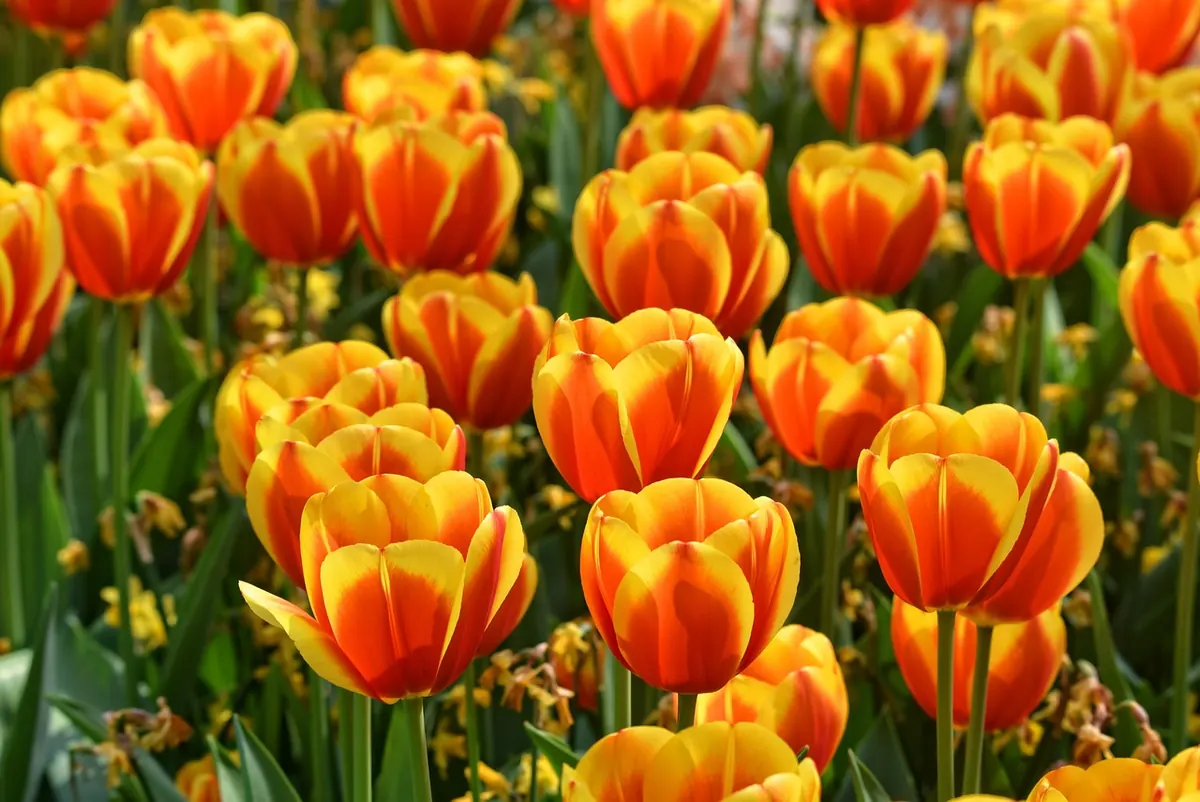
Tulips will forgive a lot — poor soil, a bit of neglect, a summer left baking in the ground — but they are unforgiving about one thing: when you plant them. Get the timing right and the bulbs root quietly through the winter and push up strong, upright stems in April. Get it wrong and you'll be looking at blind bulbs, rotted bases and a display that never quite arrives. In the UK, the sweet spot usually falls between mid-October and the end of November, though the right week depends on where you garden, what the weather is doing and whether the bulbs are going into a border, a raised bed or a pot.
Why Timing Matters in UK Gardens
Tulip bulbs need a long, cool spell in the ground before they will flower. That cold triggers root growth and sets the flower bud inside the bulb, which is why a tulip planted in a warm September often sulks while one planted in a cool November performs beautifully.
Plant too early and the bulbs sit in warm, damp soil with nothing to do. Fungal problems such as tulip fire take hold in those conditions, and rot does the rest. Plant too late and the bulbs may not root properly before winter, so the flowers come up later, smaller, or not at all. There's a second reason to be patient: British autumn rain is rarely gentle, and a bulb sitting in a waterlogged hole will rot no matter how plump it looked in the packet.
The Month-by-Month Plan
Treat the dates below as a guide rather than a rule. Soil temperature, rainfall and how exposed your garden is matter more than the number on the calendar — a gardener in Cornwall and a gardener in Aberdeenshire can plant the same variety three or four weeks apart and both get a good show.
September: prepare, don't plant
Buy bulbs now, while the choice is good, and store them somewhere cool, dark and dry — a shed shelf or garage works well. Use the month to fork over the planting area to a spade's depth, work in well-rotted compost and add grit if you garden on clay. If you're in the far north of Scotland or on a cold, exposed site, the last week of September can be the right moment to start. For most of the UK, it's still too early.
One useful exception: don't be tempted to plant containers early either, even in a mild autumn. Compost in a pot sitting against a warm south-facing wall stays considerably warmer than open ground, and early planting in containers is the quickest route to a rotten bulb.
October: the window opens
For gardeners in Scotland, northern England and anywhere with early frosts, October is the month. The soil has cooled, autumn rain has usually arrived, and there's still time for roots to form before hard weather. Aim to have bulbs in by the middle or end of the month.
November: the classic month
In the south, the Midlands, Wales and sheltered coastal gardens, November is the safest bet. Rot risk is lower than in September, and bulbs planted now will still flower well in a normal year. Watch the weather rather than the calendar: if the ground is squelching, wait for a dry spell instead of forcing bulbs into a puddle.
December: late, but often fine
Bulbs planted in December usually flower, just a week or two later and perhaps a little shorter. Plant as soon as the soil is workable — not frozen, not waterlogged — and don't worry about the cold. Tulips are hardy. Containers can be planted into January as long as the compost hasn't frozen solid.
If you've missed the window entirely, don't throw the bulbs on the compost heap. Pot them up, keep them cool and water sparingly, and you'll often still get a modest late display rather than nothing at all.
Choosing the Spot and Getting the Soil Right
Tulips are undemanding about most things except drainage and light. Give them both and they will do the rest.
- Sun: at least half a day of full sun. Shade produces stretched, floppy stems and small flowers.
- Drainage: the single most important factor. If water sits in the hole after rain, plant into a raised bed or a mound of improved soil, or set each bulb on a generous handful of grit.
- Soil: tulips aren't fussy about pH but they hate compacted, airless ground. Fork it over and add organic matter.
- Rotation: avoid planting tulips where they've grown in the last two or three years, as fungal disease builds up in the soil.
- Feed: a handful of bulb fertiliser or bonemeal at the base of the planting hole is plenty. Skip fresh manure, which can burn new roots.
Shelter matters too. A spot that catches the prevailing wind will leave you with snapped stems just as the buds colour up. In an exposed garden, plant a little deeper than usual and lean towards shorter varieties such as 'Red Riding Hood' or 'Little Beauty' rather than tall, top-heavy types that need staking.
How Deep and How Far Apart to Plant
As a rule of thumb, plant tulips at three times their own depth. A standard 12cm bulb therefore goes about 15cm below the surface, measured from the base of the bulb, and large exhibition varieties can go deeper still. Deeper planting keeps bulbs cooler in a warm autumn, anchors tall stems and helps them ride out a hard frost.
Space bulbs roughly two to three times their own width apart — about 10–15cm for most garden varieties. If you want the tight, packed look you see in public parks, ignore that spacing and set them closer, accepting slightly smaller flowers in exchange for impact. For a natural look in grass or a wilder corner, scatter a handful and plant them where they land.
- Right way up: set bulbs with the pointed nose upward and the flat basal plate downward. If you genuinely can't tell, plant them on their side — the roots will find their way down.
- Depth in pots: leave 2–3cm of compost between the bulb nose and the rim so you can water without washing the compost away.
- Mark the spot: it's easy to forget exactly where you planted, and a fork through a bed of tulips in spring is a sad moment. A few short canes will save you.
Tulips in Pots: A Special Case
Pots are where most UK tulip displays are won or lost. Bulbs in containers face far more moisture, freeze-thaw and fluctuating temperature than bulbs in open ground, so the rules tighten.
- Use fresh, peat-free multipurpose compost mixed with roughly a quarter grit by volume.
- Always use pots with drainage holes, and raise them on feet or bricks so water can escape freely.
- Plant later than you would in a border — late October to mid-November is ideal, even in the south.
- In a wet winter, move pots under the eaves or against a wall from December to February. They need cold, not a soaking.
Tulips want cold feet and a dry crown. In a British winter, that is almost always the whole secret.
Photo: MabelAmber / Pixabay